
BBPS (Bharat Bill Payment System) Integration Guide
How to integrate and earn commissions on utility payments through the centralized BBPS network.
Paisape Engineering
Engineering · 12 August 2026
Introduction to the Bharat Bill Payment System (BBPS)
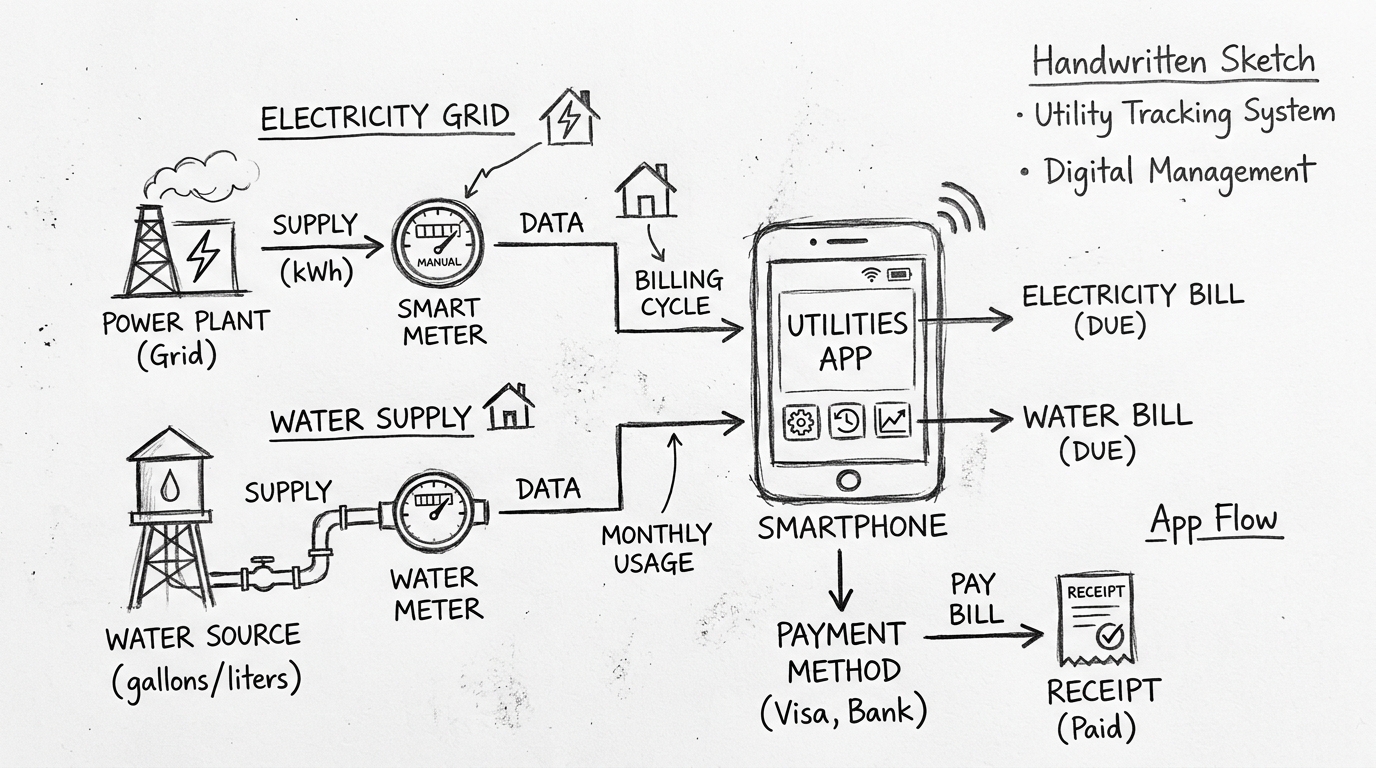
The Bharat Bill Payment System (BBPS) has revolutionized the bill payment landscape in India. Driven by the National Payments Corporation of India (NPCI), BBPS acts as an interoperable, multi-tiered infrastructure that brings together billers across categories—electricity, water, DTH, telecom, loan EMIs, FASTag, and municipal taxes—under a single unified umbrella. As a FinTech player, integrating with BBPS allows you to offer seamless bill payment experiences to your end users while generating a new, consistent revenue stream.
In this comprehensive guide, the Paisape engineering team delves deep into the architecture of BBPS, the intricacies of functioning as an Agent Institution (AI), the mechanics of the core APIs, and the detailed mathematics behind BBPS commissions and settlement.
The Architecture: Billers, BBPOUs, and Agent Institutions
Understanding the BBPS ecosystem requires clarity on the primary entities involved. At the core is the Bharat Bill Payment Central Unit (BBPCU), operated by NPCI, which governs the entire network and handles clearing and settlement. Operating under the BBPCU are the Bharat Bill Payment Operating Units (BBPOUs). A BBPOU can act as a Customer Operating Unit (COU), Biller Operating Unit (BOU), or both.
- Biller Operating Unit (BOU): Responsible for onboarding billers onto the network.
- Customer Operating Unit (COU): Responsible for providing customer-facing touchpoints (like banking apps, mobile wallets, or offline retail networks) to fetch and pay bills.
For most fintech startups and payment aggregators, direct BBPOU licensing is a massive undertaking involving rigorous RBI compliance, high net-worth requirements, and complex infrastructure audits. Instead, the standard integration path is to become an Agent Institution (AI). An AI partners with an existing COU (typically a major sponsor bank or a large payment gateway) to access the BBPS network. The AI owns the user interface and customer experience, while the COU handles the backend routing to the BBPCU.
Core Integration Mechanics: fetchBill and payBill
An AI's integration with the COU revolves around a standardized set of RESTful APIs. While the exact payload structures might vary slightly depending on your sponsor bank's API gateway, the underlying lifecycle is governed strictly by NPCI standards.
1. The fetchBill API
The fetchBill API is the starting point of any bill payment journey. It requires the customer to input specific parameters (like Consumer Number, Account ID, or Mobile Number) defined by the specific biller. This request is routed from the AI → COU → BBPCU → BOU → Biller's Billing System.
Critical considerations for fetchBill:
- Timeout Management: Because the request traverses multiple hops and hits legacy biller systems (which can be notoriously slow), your timeout strategy is crucial. NPCI generally recommends a timeout of 15-20 seconds. It is heavily advised to implement robust asynchronous polling or webhook callbacks if your COU supports them.
- Validation Rules: Each biller mandates specific regex patterns for their input parameters. The
billerInfoAPI provides these exact regex strings. Performing local, client-side validation before firing afetchBillrequest significantly reduces unnecessary network roundtrips and lowers your error rates. - Idempotency: Always generate a unique
requestIdfor each fetch attempt to prevent duplicate processing on the COU side, especially during network retries.
2. The payBill API
Once a bill is successfully fetched and presented to the user, and the user authorizes the payment (via UPI, Card, Netbanking, or Wallet), the AI triggers the payBill API.
Technical handling of payBill:
- Biller Responses and Exact Matches: Many billers (especially loan repayments and credit cards) require the payment amount to exactly match the fetched amount. Others allow partial payments or overpayments. This flag (
paymentAmountExactness) is crucial to evaluate before initiating a transaction to avoid a high failure rate. - Quick Pay vs. Fetch & Pay: Some billers support "Quick Pay," where you can directly call
payBillwithout a precedingfetchBill. However, this is largely deprecated for critical categories like electricity, where fetch-and-validate is heavily enforced to prevent erroneous credits. - Transaction Status and Webhooks: A
payBillresponse can be SUCCESS, PENDING, or FAILED. A PENDING status is common and means the transaction is queued at the BBPCU or the Biller's end. AIs must expose a robust webhook endpoint to receive asynchronous status updates. Furthermore, implementing a fallback polling mechanism using atransactionStatusAPI is vital for when webhook delivery fails.
Handling Edge Cases and Reversals
Failures are an inevitable part of distributed systems. In BBPS, a payment might successfully debit the customer's account but fail to post to the biller's system due to a BOU downtime.
When a transaction fails post-debit, the AI must trigger an automated refund to the customer. However, the exact source of truth is the Daily Transaction Report (DTR) provided by the COU. Reconciling your local database against the DTR using automated chron jobs is non-negotiable. If a transaction is marked as SUCCESS in your database but FAILED in the DTR, you are liable to refund the customer, otherwise it leads to chargebacks and regulatory penalties.
The Mathematics of BBPS Commissions
For FinTechs, understanding the revenue model of BBPS is critical for sustainability. BBPS operates on a structured, category-wise fee model defined by NPCI, though the exact split is negotiated between the AI and the COU.
Generally, the Customer Convenience Fee (CCF) can be charged to the user, or the biller pays a Biller MDRO (Merchant Discount Rate equivalent). The total commission generated is split among the BOU, BBPCU, COU, and the Agent Institution.
Typical Revenue Scenarios:
- Low Margin, High Volume (e.g., Electricity, Water): Billers in these categories typically do not pay high margins. The standard commission for an AI might range from ₹1.50 to ₹3.50 per successful transaction. The strategy here is user acquisition and retention, utilizing the bill payment as an anchor feature.
- High Margin Categories (e.g., Loan EMIs, Credit Cards, Insurance): These are the profit drivers. Financial institutions are willing to pay a premium for timely repayments. Commissions here can be structured as a flat fee (e.g., ₹10 to ₹25 per bill) or occasionally a small percentage of the transaction value.
- FASTag Recharge: Often yields a percentage-based commission, usually between 0.10% and 0.25% of the recharge amount. For commercial fleets, this volume scales up rapidly, driving significant revenue.
To compute actual profitability, you must factor in your Payment Gateway processing costs. If a user pays a ₹10,000 Loan EMI via a Credit Card, the PG fee (e.g., 1.5% = ₹150) will massively outweigh any BBPS commission you earn. Therefore, successful AI implementations heavily restrict payment modes for large ticket sizes to UPI or Netbanking, where the transaction cost is negligible or flat-rated.
Conclusion
Integrating with BBPS as an Agent Institution is a strategic move for any consumer-facing FinTech. While the integration demands rigorous engineering regarding state management, timeouts, and asynchronous reconciliation, the reward is a highly engaged user base and a predictable transaction volume. By mastering the nuances of the fetchBill and payBill APIs and carefully managing your routing and payment method mathematics, you can build a highly profitable and resilient bill payment engine.