
Data Breach Management: How to Report Incidents to DPBI to Avoid Rs 200 Cr Fines
A step-by-step DPDPA incident response SOP for Indian fintechs to detect, assess, and report data breaches to the Data Protection Board within legal timeframes.
Paisape Engineering
Engineering · 19 August 2026
Part 4: Vendor DPAs | Part 6: Hardware Privacy
1. What Counts as a Personal Data Breach?
The DPDPA defines a breach as any unauthorized processing, accidental disclosure, acquisition, sharing, use, alteration, destruction, or loss of access to personal data. This includes database exfiltration, misconfigured cloud storage exposing PII, insider threats, ransomware attacks, and third-party processor breaches.
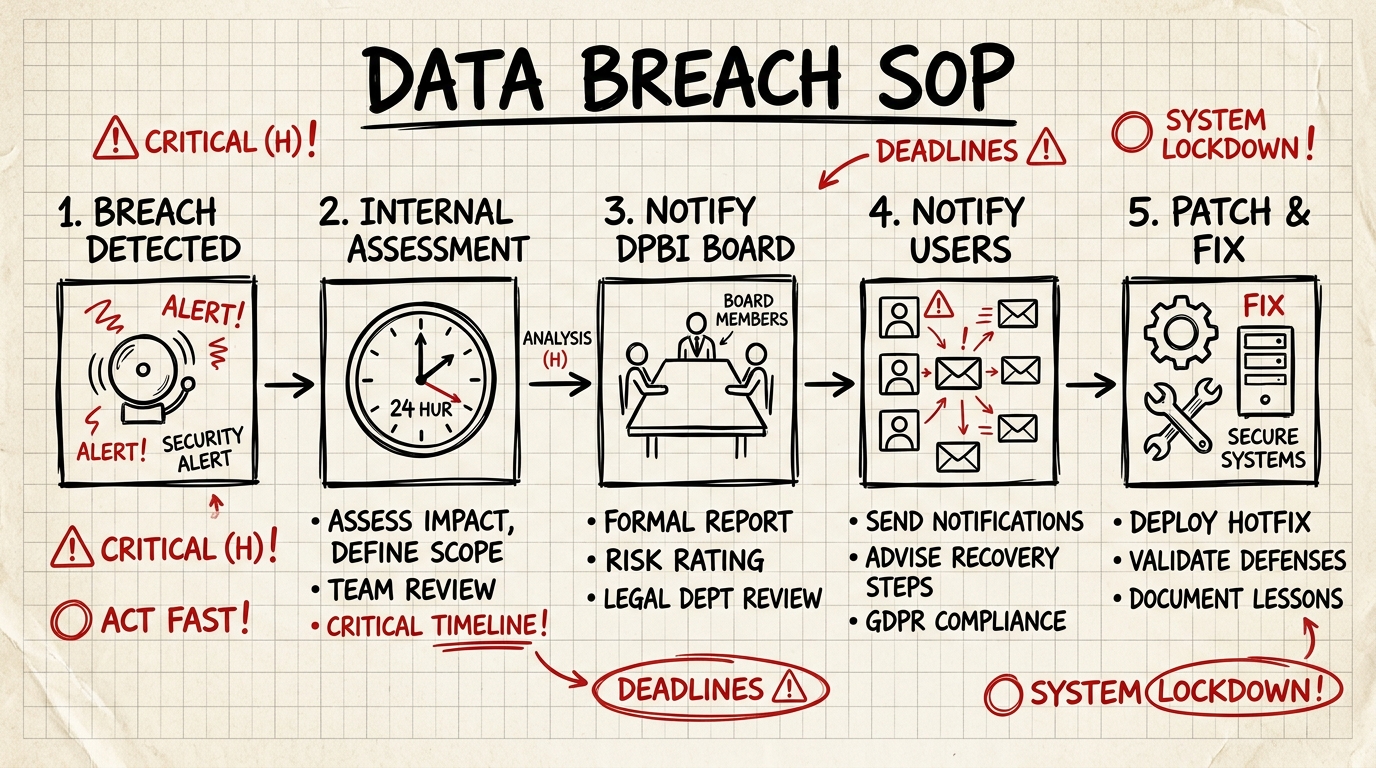
2. The 5-Step Mandatory Breach Response SOP
- Detection and Containment (0-2 Hours): Activate Incident Response Team. Isolate affected systems. Revoke compromised API keys. Preserve all logs in read-only storage.
- Internal Assessment (2-24 Hours): Define scope - which data categories, how many users affected. Assess risk level: High (Aadhaar/PAN/card data), Medium (contact info), Low (non-PII). Produce a formal Breach Assessment Report.
- DPBI Notification (Within 72 Hours): Notify the Data Protection Board with: nature and scope of breach, number of affected users, DPO contact details, likely consequences, and remedial measures taken.
- User Notification: Inform all affected Data Principals via email/SMS about what was breached, the risk it poses, and what steps they should take.
- Patch and Post-Incident Review: Fix the vulnerability. Run full VAPT. Document lessons learned. File a final closure report with DPBI.
3. Technical Safeguards
- Encryption at Rest: AES-256 for all PII databases. Keys via HSM or cloud KMS.
- Encryption in Transit: TLS 1.3 for all APIs. mTLS for microservice communication.
- Access Controls: RBAC with Least Privilege. MFA mandatory for production DB access.
- Continuous Monitoring: SIEM for real-time anomaly detection and automated alerts on bulk data exports.
Continue the DPDPA Series
भाग 4: वेंडर DPA | भाग 6: हार्डवेयर प्राइवेसी
1. व्यक्तिगत डेटा ब्रीच क्या है?
DPDPA के अनुसार, किसी भी अनधिकृत डेटा प्रसंस्करण या डेटा तक पहुंच खोने को ब्रीच माना जाता है। इसमें हैकर द्वारा चोरी, गलत कॉन्फ़िगर की गई क्लाउड स्टोरेज, और रैंसमवेयर हमले शामिल हैं।
2. अनिवार्य ब्रीच प्रतिक्रिया के 5 कदम
- पहचान और नियंत्रण (0-2 घंटे): IRT सक्रिय करें, प्रभावित सिस्टम आइसोलेट करें।
- आंतरिक मूल्यांकन (2-24 घंटे): दायरा और जोखिम परिभाषित करें।
- DPBI को सूचना (72 घंटे में): DPO विवरण और उठाए गए कदम सहित।
- यूजर सूचना: प्रभावित ग्राहकों को स्पष्ट रूप से बताएं।
- पैच और समीक्षा: VAPT चलाएं, DPBI को अंतिम रिपोर्ट दाखिल करें।
3. तकनीकी सुरक्षा उपाय
- AES-256, TLS 1.3, RBAC, MFA, और SIEM निगरानी अनिवार्य।