
NPCI AutoPay 2.0 & Recurring Mandate Switches: Automated Retry Queues & Presentation Windows
Architectural breakdown of high-throughput recurring payment engines in India: orchestrating mandate registration, 24-hour statutory pre-debit notifications, and dynamic presentation windows that maximize subscription success rates.
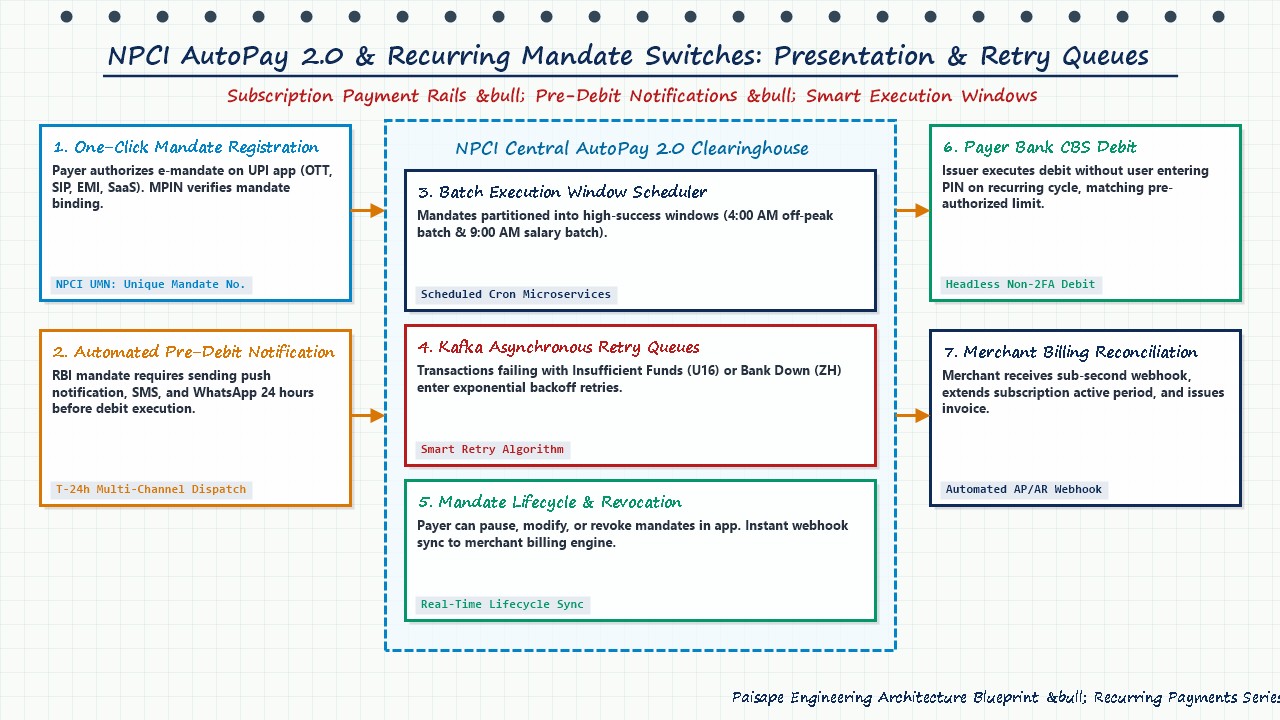
From OTT streaming platforms and insurance premiums to SIP investments and SaaS billing, recurring payments in India are governed by RBI’s strict e-mandate framework. Under these guidelines, merchants cannot execute arbitrary debits without an authorized mandate and mandatory pre-debit intimation sent at least 24 hours prior to debit presentation.
NPCI AutoPay 2.0 has modernized this ecosystem by streamlining mandate creation over UPI with instant UPI PIN authentication and higher execution limits (up to ₹15,000 for mutual funds, insurance, and education without additional factor authentication). However, orchestrating recurring debits across millions of subscribers requires sophisticated switch engineering.
1. Mandate Registration Lifecycle & UMN Generation
When a subscriber enrolls in a subscription, the merchant’s billing engine sends a MandateCreate request through the acquiring switch to NPCI. The customer authorizes the mandate once using their UPI PIN. Upon confirmation, NPCI issues a globally unique Unique Mandate Number (UMN):
{
"umn": "UMN20261029PAISAPE0098234",
"amountRule": "MAX",
"amount": 499.00,
"frequency": "MONTHLY",
"validityEnd": "2030-12-31",
"preDebitDays": 1
}
2. The 24-Hour Pre-Debit Intimation Switch Pipeline
The RBI strictly penalizes any un-notified debit presentation. At T-24 Hours, Paisape’s AutoPay engine dispatches a PreDebitNotify API call to NPCI, which triggers an SMS and in-app push notification via the customer’s PSP application (Google Pay, PhonePe, Paytm, BHIM, etc.). The notification contains the merchant name, scheduled debit date, UMN, and an instant opt-out/cancel option.
3. Intelligent Presentation Windows & Retries
Submitting debits at 12:01 AM on the billing date often causes high failure rates due to customer salary settlement timings or bank maintenance windows. Paisape employs a machine-learning-driven presentation scheduler that dispatches debit requests during optimal banking availability windows (typically 06:00 AM – 10:00 AM).
If an initial debit fails with ZM (Insufficient Funds), the automated retry queue schedules smart retries over the subsequent 48-hour presentation window, increasing subscription collection success by over 23% without triggering consumer fatigue.