
Soundbox vs POS Terminals: Acoustic Verification in High-Velocity Indian Retail
An architectural comparison between instant IoT audio notification devices and traditional POS hardware for high-frequency micro-transactions.
Paisape Engineering
Engineering · 12 August 2026
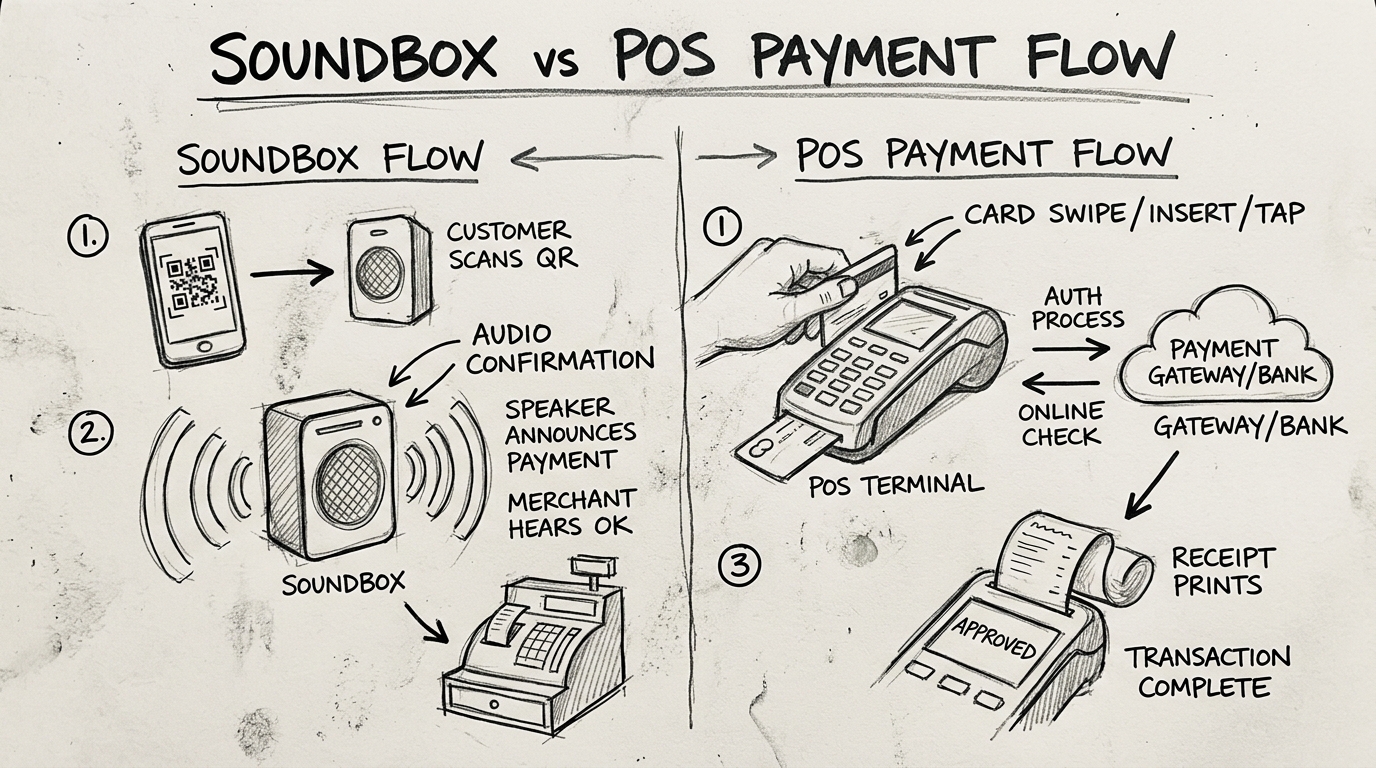
The Micro-Payment Verification Challenge
In Indian retail environments—from high-density kirana stores to tea stalls and busy checkout counters—speed and trust are everything. When a customer pays ₹30 via UPI QR code, a merchant cannot afford to stop serving customers for 15 seconds to check their personal mobile phone for an SMS notification or banking push alert.
This operational friction created the necessity for immediate payment confirmation hardware. The market split into two dominant form factors: Traditional POS Terminals and IoT Audio Soundboxes.
Architectural & Hardware Comparison
Understanding why Soundboxes achieved explosive growth across India requires examining the engineering trade-offs between acoustic confirmation devices and card POS machines:
- Hardware Unit Economics: POS terminals require thermal printer mechanisms, magnetic card swipe heads, EMV chip readers, and touchscreen LCD displays, driving unit costs to ₹7,000–₹12,000. Soundboxes utilize low-power MCU chips, GSM 4G SIM modules, and high-decibel speakers, keeping hardware costs under ₹1,200.
- Latency to Confirmation: Card POS processing involves multi-step EMV key exchanges, PIN verification, and thermal paper printing (taking 8–14 seconds). Soundboxes leverage MQTT/WebSocket persistent connections over cellular networks to announce payment status in under 1.8 seconds.
- Prevention of Fake QR Screenshots: Fraudsters frequently use fake UPI payment apps showing forged payment success screens. Soundboxes completely eliminate screen fraud because the merchant only hands over goods upon hearing the physical audio announcement ("Received ₹30 on Paisape").
MQTT & SIM Push Technology Behind Soundboxes
Behind the simple audio speaker lies a dedicated IoT telemetry stack. When a customer scans the merchant’s dynamic or static QR code and authorizes payment on their UPI app, the bank switch routes the webhook notification to the Paisape Cloud Gateway.
The gateway instantly dispatches an encrypted lightweight MQTT payload over cellular networks directly to the Soundbox device ID. The onboard microcontroller decodes the speech synthesis file (supporting 10+ regional Indian languages) and triggers the amplifier output in real time.
Conclusion: Hybrid Merchant Stack
While POS terminals remain indispensable for credit/debit card transactions and billing invoice printing, the Soundbox has won micro-transaction QR payments. Engineering modern acquiring platforms requires offering a unified device management cloud that supports both POS terminals and acoustic Soundboxes seamlessly