
Right to Erasure vs. 10-Year KYC Retention: Resolving the Fintech Conflict
How DPDPA Section 8(7) resolves the conflict between a user's Right to Erasure and mandatory RBI/PMLA retention.
Paisape Engineering
Engineering · 19 August 2026
Part 2: Consent Architecture | Part 4: Vendor DPAs
1. The Core Conflict
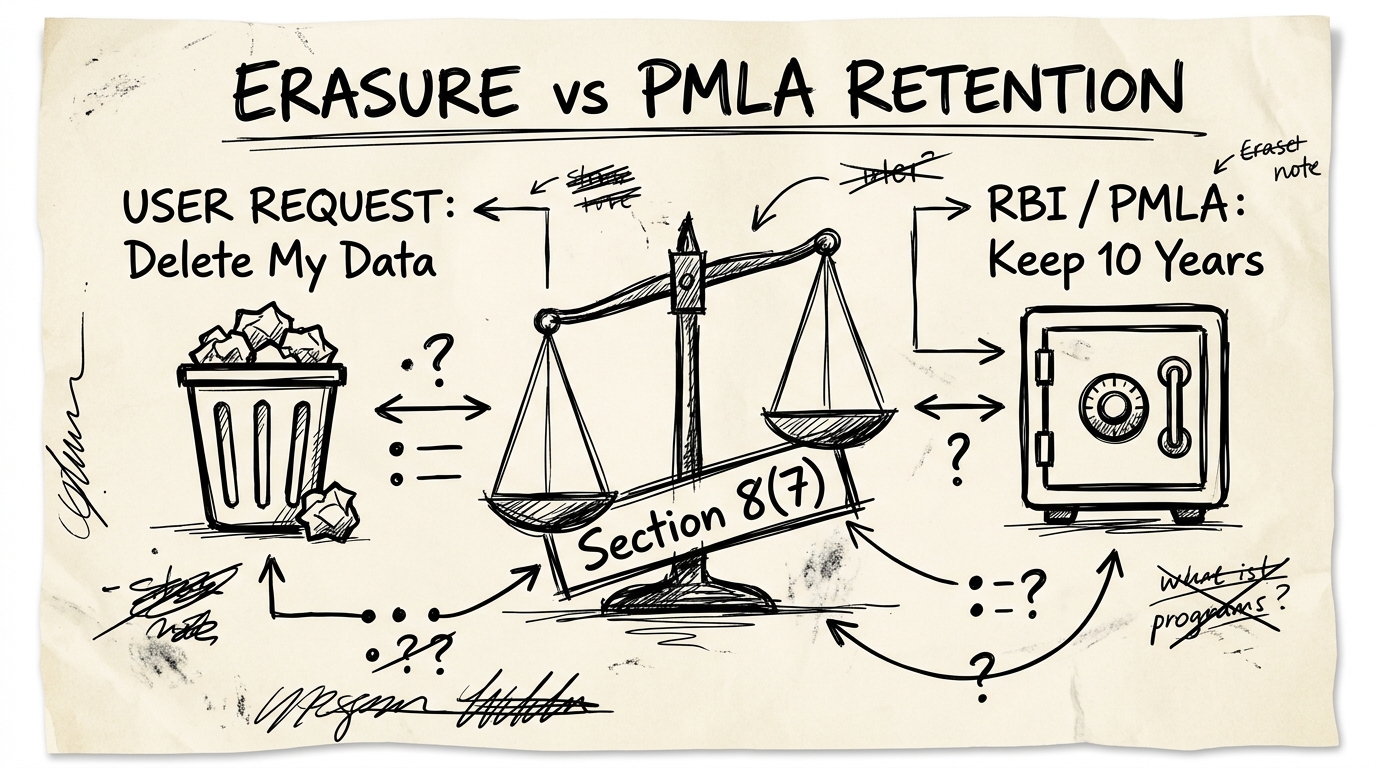
DPDPA gives every Indian citizen a Right to Erasure. At the same time, RBI and PMLA mandate fintechs to retain KYC and transaction records for 5 to 10 years. What happens when a customer says delete my data but the law says keep it for 10 years?
2. The Legal Resolution: Section 8(7)
DPDPA Section 8(7) states a Data Fiduciary is not required to comply with an erasure request if retaining data is necessary for compliance with any law in force in India. RBI and PMLA obligations legally override a customer's erasure request.
3. Retention Requirements Table
| Data Category | Retention Period | Authority |
|---|---|---|
| KYC Documents (PAN, Aadhaar) | 5 Years from closure | RBI KYC Master Direction |
| Transaction Records | 10 Years | PMLA 2002, Section 12 |
| Marketing Data | Delete on request | DPDPA Section 8(7) |
4. The Architectural Solution: Data Isolation
Separate data into two layers: Layer A (Statutory Compliance Store, immutable, restricted to compliance officers only) and Layer B (Product Data Store, fully erasable on user request).
5. Communicating Retention to Users
When rejecting a deletion request for statutory data, send a transparent written response explaining which data was deleted, which is retained under PMLA/RBI, the legal basis, and the exact future deletion date.
Continue the DPDPA Series
भाग 2: कंसेंट आर्किटेक्चर | भाग 4: वेंडर DPA
1. मुख्य विरोधाभास
DPDPA हर भारतीय को Right to Erasure देता है। दूसरी तरफ, RBI और PMLA फिनटेक कंपनियों को KYC और ट्रांजैक्शन रिकॉर्ड 5 से 10 साल तक रखने के लिए बाध्य करते हैं।
2. कानूनी समाधान: धारा 8(7)
RBI और PMLA की जिम्मेदारियां ग्राहक की डेटा मिटाने की मांग को कानूनी रूप से ओवरराइड करती हैं।
3. किस डेटा को रखना जरूरी है?
- KYC दस्तावेज: खाता बंद होने के 5 साल बाद तक।
- ट्रांजैक्शन रिकॉर्ड: 10 साल (PMLA 2002)।
- मार्केटिंग डेटा: यूजर की मांग पर तुरंत डिलीट।
4. आर्किटेक्चरल समाधान: डेटा आइसोलेशन
परत A (वैधानिक, केवल अनुपालन अधिकारियों तक पहुंच) और परत B (मार्केटिंग, DPDPA के तहत मिटाने योग्य)।