Building DPDPA-Compliant Consent Engines & 22-Language Notices
A deep engineering guide to building DPDPA-compliant consent collection UI, Consent Vault databases, and multilingual notice systems.
Paisape Engineering
Engineering · 19 August 2026
Part 1: DPDPA Overview | Part 3: Erasure vs PMLA
1. Why Consent Architecture Matters
Under the DPDPA, a single improperly designed consent UI is a direct legal violation worth up to Rs 250 Crore. Every onboarding screen and payment confirmation flow is a compliance checkpoint for fintechs processing millions of transactions monthly.
2. Core Legal Rules for Consent
- Unbundled: KYC consent must be completely separate from marketing consent.
- Unambiguous Opt-In: Only un-ticked boxes that users actively check are permissible. Pre-ticked boxes are illegal.
- Purpose-Specific: Each toggle must state one clear purpose.
- Withdrawable: Revocation must be as easy as granting consent.
- Timestamped: Backend must log timestamp, notice version, and method for every consent action.
3. The 22 Indian Languages Requirement
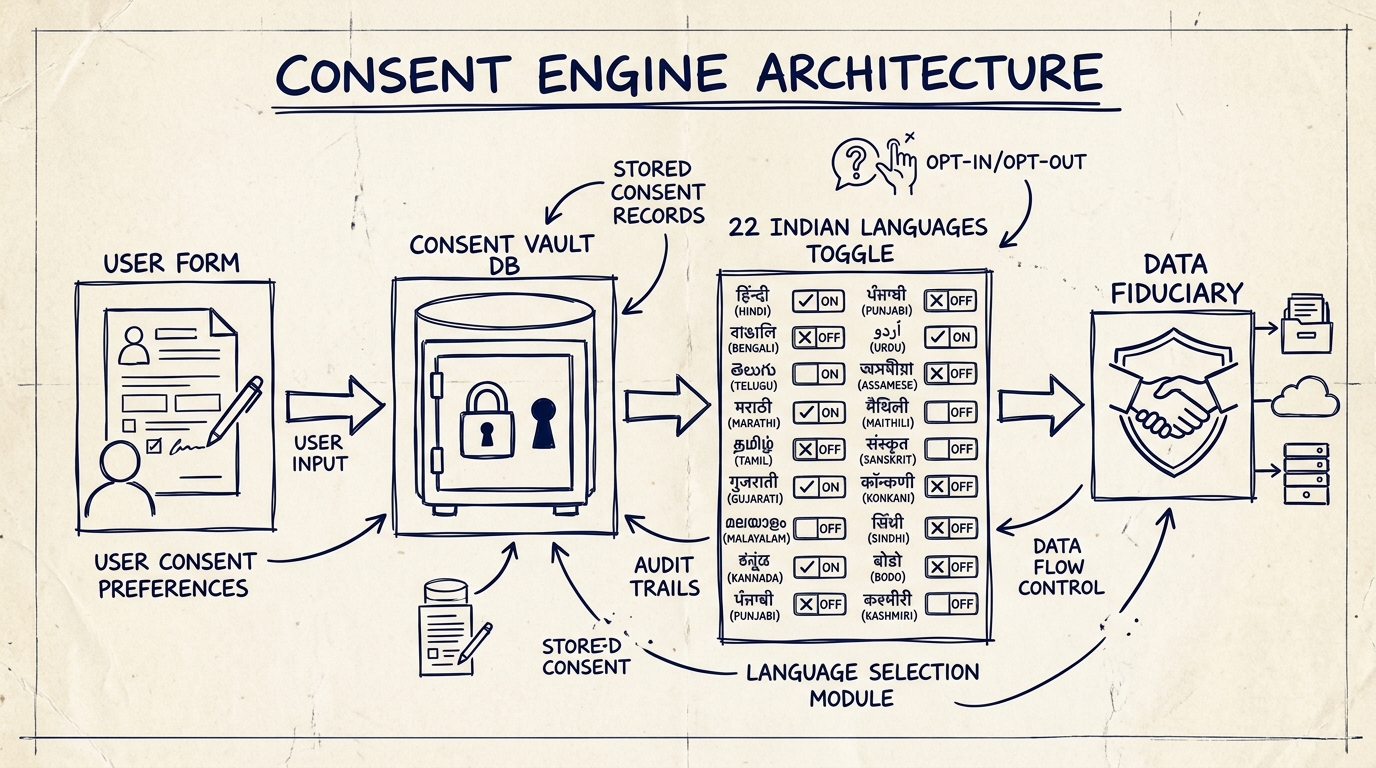
DPDPA requires consent notices in all 22 languages of the Eighth Schedule: Assamese, Bengali, Bodo, Dogri, Gujarati, Hindi, Kannada, Kashmiri, Konkani, Maithili, Malayalam, Manipuri, Marathi, Nepali, Odia, Punjabi, Sanskrit, Santali, Sindhi, Tamil, Telugu, and Urdu. The engineering solution is a Consent Notice CMS storing notice text as structured JSON with language keys, rendered dynamically at runtime.
4. The Consent Vault Database Schema
A Consent Vault is a dedicated, append-only database table logging every consent action, creating a tamper-proof audit trail producible as legal evidence before DPBI.
CREATE TABLE consent_log (
  id            UUID PRIMARY KEY DEFAULT gen_random_uuid(),
  user_id       VARCHAR(64) NOT NULL,
  purpose_code  VARCHAR(64) NOT NULL,
  language      VARCHAR(10) NOT NULL,
  notice_ver    VARCHAR(20) NOT NULL,
  action        VARCHAR(10) NOT NULL,
  consented_at  TIMESTAMPTZ NOT NULL DEFAULT NOW()
);
5. Self-Service Consent Revocation
Every product must expose a Privacy Centre page where users can view active consents, revoke any individual toggle, receive immediate email/SMS confirmation, and trigger automated downstream deactivation.
Continue the DPDPA Series
भाग 1: DPDPA अवलोकन | भाग 3: डेटा मिटाना बनाम PMLA
1. कंसेंट आर्किटेक्चर क्यों जरूरी है?
DPDPA के तहत एक गलत तरीके से डिजाइन किया गया कंसेंट UI एक प्रत्यक्ष कानूनी उल्लंघन है जिस पर 250 करोड़ रुपये तक का जुर्माना लगाया जा सकता है।
2. कानूनी सहमति के मुख्य नियम
- अलग सहमति: KYC सहमति मार्केटिंग से बिल्कुल अलग रखें।
- स्पष्ट ऑप्ट-इन: पहले से टिक बॉक्स पूरी तरह गैर-कानूनी हैं।
- उद्देश्य-विशिष्ट: हर टॉगल का एक स्पष्ट उद्देश्य।
- वापस लेने योग्य: सहमति रद्द करना उतना ही आसान।
3. 22 भारतीय भाषाओं की जरूरत
DPDPA के अनुसार सहमति नोटिस संविधान की 8वीं अनुसूची की सभी 22 भाषाओं में उपलब्ध होनी चाहिए। इंजीनियरिंग समाधान: JSON-based Consent Notice CMS।
4. Consent Vault Database
एक append-only डेटाबेस टेबल जो हर सहमति कार्रवाई को लॉग करती है और DPBI के सामने कानूनी साक्ष्य के रूप में प्रस्तुत की जा सकती है।
5. सहमति वापसी (Revocation)
हर प्रोडक्ट में Privacy Centre पेज होना चाहिए जहां यूजर सभी सहमति देख सके और किसी भी टॉगल को स्वतंत्र रूप से रद्द कर सके।