
Bharat Connect (BBPS B2B) Invoicing Rails: ERP Switch Integration & Supply Chain Escrow
An engineering breakdown of NPCI Bharat Connect's B2B electronic invoice presentment and payment (EIPP) rails — integrating SAP/Oracle ERPs, automated e-Way bill and GSTN cross-checks, dynamic early-payment discounts, and nodal escrow settlement switches.
1. The Problem with Fragmented B2B Settlements
While consumer payments in India through UPI have reached real-time ubiquity, inter-enterprise B2B trade has historically suffered from manual friction. Traditional business settlements rely on disconnected accounts receivable (AR) systems, manual NEFT/RTGS batch reconciliations, PDF email invoices, and 45-to-90 day payment delays.
To digitize India's \$1.5 Trillion B2B trade ecosystem, NPCI rebranded Bharat BillPay (BBPS) to Bharat Connect and launched the Bharat Connect B2B Invoicing Platform. This architecture links enterprise ERPs (SAP, Oracle, Tally, Zoho) directly into an automated presentment, financing, and instant settlement clearinghouse.
2. Architecture of the Bharat Connect B2B Switch
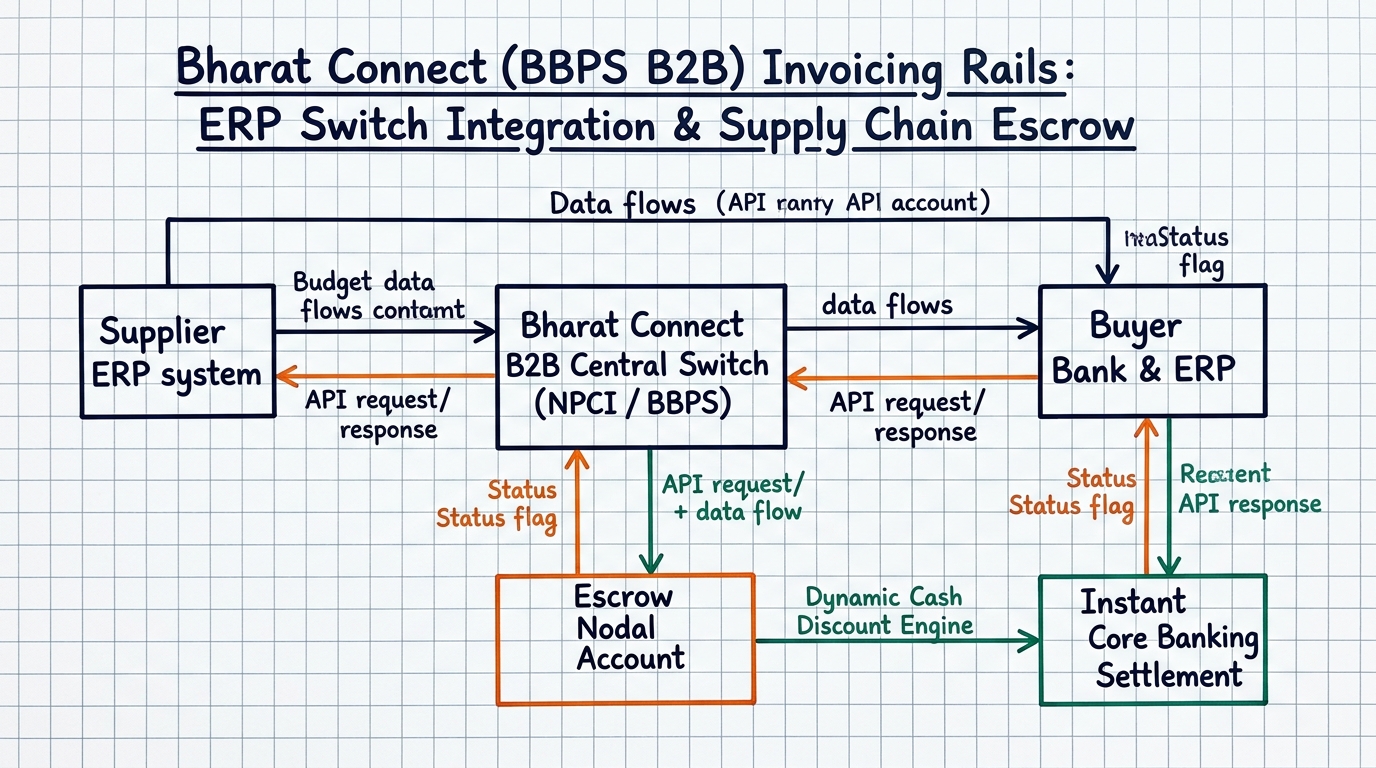
As detailed in the hand-drawn technical whiteboard blueprint above, the Bharat Connect B2B network comprises five fundamental architectural tiers:
- Supplier ERP Adapter: Pushes standardized electronic invoices (JSON/UBL formats) with embedded IRN (Invoice Reference Number) and GST e-Way bills to the B2B Gateway.
- Bharat Connect Central Switch (NPCI / BBPOU): Acts as the national presentment router, validating digital signatures, checking supplier-buyer PAN linkages, and calculating platform fees.
- Buyer ERP & Approval Engine: Receives the presentment payload, executes 3-way matching (Purchase Order, Goods Receipt Note, and Invoice), and authorizes payment release.
- Dynamic Cash Discounting Node: Computes APR-based early payment incentives (e.g. 2% discount for payment within 10 days instead of net 45).
- Escrow / Nodal Settlement Rail: Directs RTGS / NACH funds through RBI-compliant nodal escrow accounts with automated split payouts for GST TDS, platform commission, and net supplier proceeds.
3. Standard Invoice Presentment Payload (B2B EIPP)
Below is a representative JSON contract utilized during invoice presentment over Bharat Connect B2B switches:
{
  "head": {
    "ver": "1.0",
    "ts": "2026-10-15T11:30:00.000Z",
    "msgId": "MSG_BCB2B_8830192"
  },
  "invoiceDetail": {
    "irn": "4a5b6c7d8e9f0123456789abcdef0123456789abcdef0123456789abcdef0123",
    "sellerGstin": "27AAAAA0000A1Z5",
    "buyerGstin": "29BBBBB1111B1Z2",
    "invoiceNumber": "INV-2026-10-992",
    "invoiceDate": "2026-10-15",
    "totalAmount": 1450000.00,
    "gstAmount": 261000.00,
    "discountTerms": {
      "discountDays": 10,
      "discountPercentage": 2.0,
      "payableAmount": 1421000.00
    },
    "settlementVirtualAccount": "PAPEESC_VPA_773102@yesbank"
  }
}
4. 3-Way ERP Reconciliation & Auto-Matching
The single greatest operational cost in corporate treasury is manual reconciliation. Under Bharat Connect B2B, the switch injects an immutable Unique Transaction Identifier (UTI) across the entire lifecycle:
- The UTI binds the original PO number, supplier invoice number, bank clearing UTR, and corporate ledger entry.
- ERP Webhooks notify accounts payable (AP) software the moment funds touch the settlement node, achieving zero-touch sub-second reconciliation.
- Disputes and credit notes (debit/credit adjustments) are routed in-band, eliminating endless email discrepancy threads between vendor and enterprise.
5. Comparison: Legacy Corporate NEFT vs. Bharat Connect B2B
| Capability | Legacy Manual RTGS/NEFT | Bharat Connect B2B Platform |
|---|---|---|
| Invoice Presentment | PDF via email / postal mail | Real-time structured API sync between ERPs |
| Reconciliation Speed | 2 – 7 business days (manual matching) | Instantaneous (Sub-500ms via UTI tags) |
| Working Capital Financing | Offline TReDS registration required | Embedded single-click invoice discounting |
| Escrow & Split Settlement | Complex manual multi-hop transfers | Automated node split (GST + Platform + Supplier) |
6. Implementation Blueprint for FinTechs & Aggregators
Payment Aggregators (PAs) and fintech payment switch operators can integrate with Bharat Connect B2B as Operating Units (BBPOUs). Keys to resilient production switch engineering include:
- High-Throughput Webhook Ingestion: Use distributed Kafka message queues to handle batch end-of-month corporate invoice dumps without dropping payloads.
- HSM Signature Verification: Verify GSTN digital signatures and e-Way bills inside Hardware Security Modules (HSMs) to prevent invoice fraud and duplicate financing claims.
- Automated Fallback Rails: If the primary buyer bank node experiences elevated latency, fail over gracefully to alternate corporate net banking or virtual escrow account rails.
1. बी2बी भुगतान और इनवॉइसिंग की चुनौतियां
भारत में जहां खुदरा और उपभोक्ता भुगतान यूपीआई के माध्यम से रीयल-टाइम हो चुके हैं, वहीं उद्यमों और व्यवसायों (B2B) के बीच लेन-देन अब भी ईमेल इनवॉइस, मैन्युअल एनईएफटी (NEFT/RTGS) और कई हफ्तों की देरी से जूझ रहा है।
एनपीसीआई (NPCI) ने भारत बिलपे का विस्तार करते हुए भारत कनेक्ट बी2बी (Bharat Connect B2B) प्लेटफॉर्म शुरू किया है, जो कंपनियों के ERP सिस्टम (जैसे SAP, Tally, Zoho) को सीधे केंद्रीय भुगतान स्विच से जोड़कर स्वचालित इनवॉइस प्रेजेंटमेंट और तत्काल सेटलमेंट प्रदान करता है।
2. भारत कनेक्ट बी2बी स्विच आर्किटेक्चर
जैसा कि ऊपर दिए गए व्हाइटबोर्ड डायग्राम में दिखाया गया है:
- सप्लायर ERP: डिजिटल ई-इनवॉइस सीधे प्लेटफॉर्म पर भेजता है।
- भारत कनेक्ट सेंट्रल स्विच: जीएसटीएन और ई-वे बिल का सत्यापन करता है।
- बायर ERP: 3-वे ऑटोमैटिक मैचिंग के बाद भुगतान को मंजूरी देता है।
- एस्क्रो सेटलमेंट: नोडल बैंक अकाउंट के माध्यम से जीएसटी और टैक्स काटकर सप्लायर को तुरंत पैसा क्रेडिट कर दिया जाता है।
3. शून्य त्रुटि और तत्काल समाधान
प्रत्येक इनवॉइस के साथ एक अद्वितीय लेन-देन पहचानकर्ता (UTI) जोड़ा जाता है, जिससे खातों का मिलान (Reconciliation) सेकंडों में स्वतः पूरा हो जाता है और कंपनियों का कार्यशील पूंजी चक्र (Working Capital Cycle) सुदृढ़ होता है।